What Is llms.txt? A Practical Guide (and an Honest Look at Who Reads It)
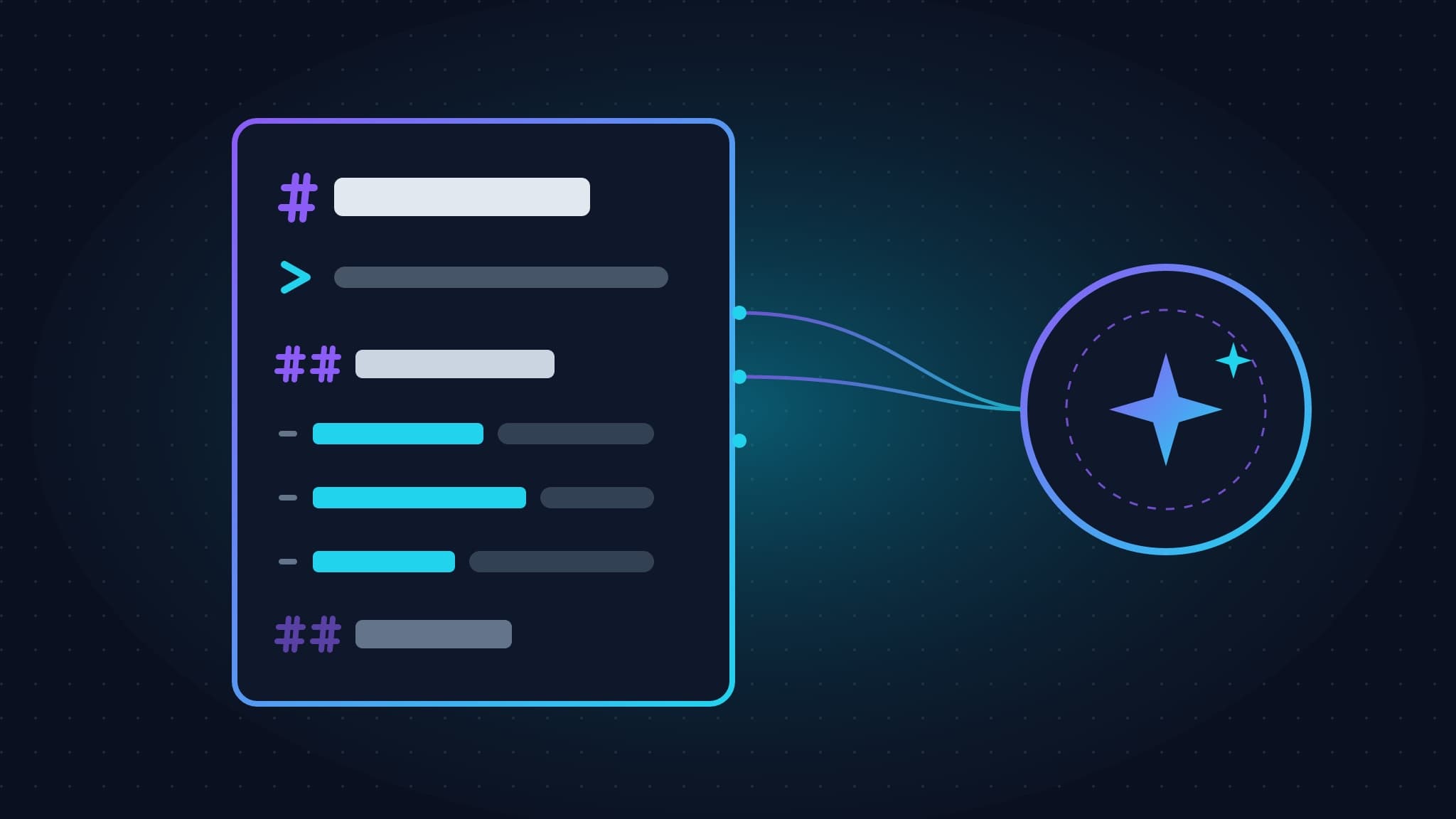
llms.txt is a Markdown file you put at the root of your site to give AI tools a short, curated guide to your most important pages. It was proposed by Jeremy Howard of Answer.AI in September 2024, and since then thousands of sites have added one, from Stripe and Vercel to Anthropic's developer docs. This guide covers how the format works, a template you can copy, the mistakes we see most often, and an honest answer to the question everyone asks: does anything actually read it?
Why llms.txt exists
A web page built for people is a poor input for a language model. The useful content is wrapped in navigation, cookie banners, scripts and layout markup, and an AI tool has limited room for any of it. llms.txt flips this around: instead of the AI digging through your HTML, you hand it a clean index that says what your site is and which pages matter, ideally linking to plain Markdown versions of those pages.
The format
llms.txt is ordinary Markdown with a fixed order. Only the first element is required:
- An H1 with the name of the site or project, as the first line (
# Acme). This is the only required part. - A blockquote summary right under it (
> Acme is…): the key facts an AI needs to understand everything else. - Optional free text: any extra context, as paragraphs or lists.
- H2 sections of links, each item written as
- [name](url): optional notes. - An optional section titled exactly
## Optionalfor links an AI can skip when it is short on room.
A complete example you can adapt:
# Acme Docs

> Acme is a payments API for online stores. These docs cover setup,
> the REST API, and the official SDKs.

Acme is available in the EU and US. All amounts are in minor units.

## Getting started
- [Quickstart](https://acme.com/docs/quickstart.md): Take a first payment in 5 minutes
- [Authentication](https://acme.com/docs/auth.md): API keys and OAuth

## API reference
- [Payments](https://acme.com/docs/api/payments.md): Create, capture and refund
- [Webhooks](https://acme.com/docs/api/webhooks.md): Event types and retries

## Optional
- [Changelog](https://acme.com/changelog.md)
llms.txt vs. llms-full.txt
Many sites publish a second file, llms-full.txt, with the full text of their key pages in one document. llms.txt is the table of contents; llms-full.txt is the whole book, for tools that would rather load everything at once than follow links. Keep llms.txt short and put long content in the full file.
What real llms.txt files look like
We ran our llms.txt checker on a few well-known sites on October 31, 2026. All of them had a valid file, and all of them bent the recommended structure somewhere:
- stripe.com: a title, a summary, 31 sections and 305 links. Closest to the recommended structure.
- vercel.com: 9 sections and 28 links, plus several plain-text bullets that describe products rather than link to them.
- docs.anthropic.com: 686 links and an llms-full.txt, but no blockquote summary, and a list of languages written as plain text.
The lesson: the format is forgiving. Beyond the H1, the structure is a recommendation, and real files vary. What matters is that the file loads, the links work, and an AI reading it can tell what your site is.
The mistakes we see most often
- The homepage served as llms.txt. Many single-page apps answer every unknown path with their HTML shell, so
/llms.txtreturns a 200 that is really your homepage. It looks like the file exists. It doesn't. - No H1, or several. The one required element is a single
# Nameat the top. - Bare URLs instead of Markdown links.
- Docs: https://acme.com/docsis readable to a person, but the format expects- [Docs](https://acme.com/docs). - Dumping everything into llms.txt. A multi-megabyte llms.txt defeats the point of a short index. That content belongs in llms-full.txt.
- Broken links. Pages move. An index that points to 404s is worse than no index.
Does anything actually read llms.txt?
This is the honest part. As of October 2026, no major AI company has officially committed to reading llms.txt when it crawls the web, and Google has said publicly that it doesn't use the file for Search. The companies' crawler documentation points to robots.txt for access rules and doesn't mention llms.txt at all.
Where llms.txt earns its keep today is when someone points an AI at it directly: a developer pasting yoursite.com/llms.txt into an assistant, or an AI coding tool that lets you add a documentation URL. That is why the strongest adopters are developer platforms and documentation sites.
Should you add one?
If you run documentation, an API, or a developer product, yes: it takes an hour, and it makes your docs far easier to use from AI tools. For a typical business or marketing site, it's a cheap, low-risk extra, but don't expect it to change your traffic or rankings. Either way, it is not a way to control AI crawlers. For that, see what ai.txt is and why robots.txt does the real work.
Already have one? Validate it with our free llms.txt checker. It checks the title, the summary, every section, llms-full.txt, and whether your first 10 links actually work.